Course III
There are moments in history when everything changes in an instant
For Paul the Apostle, that moment came on a dusty road outside the city of Damascus. But before we get there, we have to understand something. Paul did not begin as a hero of Christianity. In fact, he began as one of its fiercest enemies. He was brilliant. educated. devout, but not a devout Christian to begin, but a devout Jewish Man. Paul believed he was defending the truth. And so when this strange movement began spreading regarding followers of a man called Jesus, claiming He had risen from the dead, Paul saw it as dangerous. Even blasphemous. He approved the execution of Stephen, the first Christian martyr. He hunted believers. Dragged them from their homes. Brought them to trial. This was not a man casually opposed to Christianity. This was a man determined to erase it.
Then came the moment. Paul was traveling on a road to the city of Damascus with authority to arrest Christians there. But somewhere along that road, something happened. A light from heaven suddenly surrounded him. He fell to the ground. And he heard a voice. “Saul, Saul… why are you persecuting me?” Paul answered the only question he could ask in that moment: “Who are you, Lord?” And the voice replied: “I am Jesus.” In that instant, everything changed. The man who believed he was serving God suddenly realized he had been fighting against Him. The persecutor had encountered the very Christ he was trying to silence. Paul would later spend three days blind. Three days in darkness. Three days to reconsider everything he thought he knew about God, about truth, about his own life. And when his sight returned… his mission began.
Paul did not simply become a believer. He became a messenger. The Messenger. He traveled across the ancient world, through cities and synagogues, across seas and deserts proclaiming the very name he once tried to destroy. He spoke of Christ in Jerusalem, in Antioch, in Corinth, in Ephesus, and eventually even in Rome. Everywhere he went, he carried the same message: Jesus Christ is Lord. Now to us, that might sound like a simple statement of faith. But in the Roman world, those words were explosive. Because in the empire there was already a phrase everyone was expected to say: Kaisar Kyrios. “Caesar is Lord.” The emperor was not just a political leader. He was presented as a divine authority, the one who guaranteed order, stability, and loyalty across the empire. To say “Caesar is Lord” was to declare allegiance.
But the early Christians said something different: Iēsous Kyrios. Jesus is Lord. And that small change of words carried enormous meaning. It meant that ultimate authority did not belong to Rome. It meant salvation did not come from the emperor. It meant that the crucified and risen Christ, not Caesar, was the true king of the world. And Paul carried that message everywhere. Into Roman cities. Into marketplaces. Into synagogues. Into prisons. He carried a message that sounded simple…but threatened to turn the entire world upside down. He was beaten. Stoned. Imprisoned. Rejected. But he never stopped. N.T. Wright famously said, “Wherever St. Paul went, there was a riot. Wherever I go, they serve tea.”
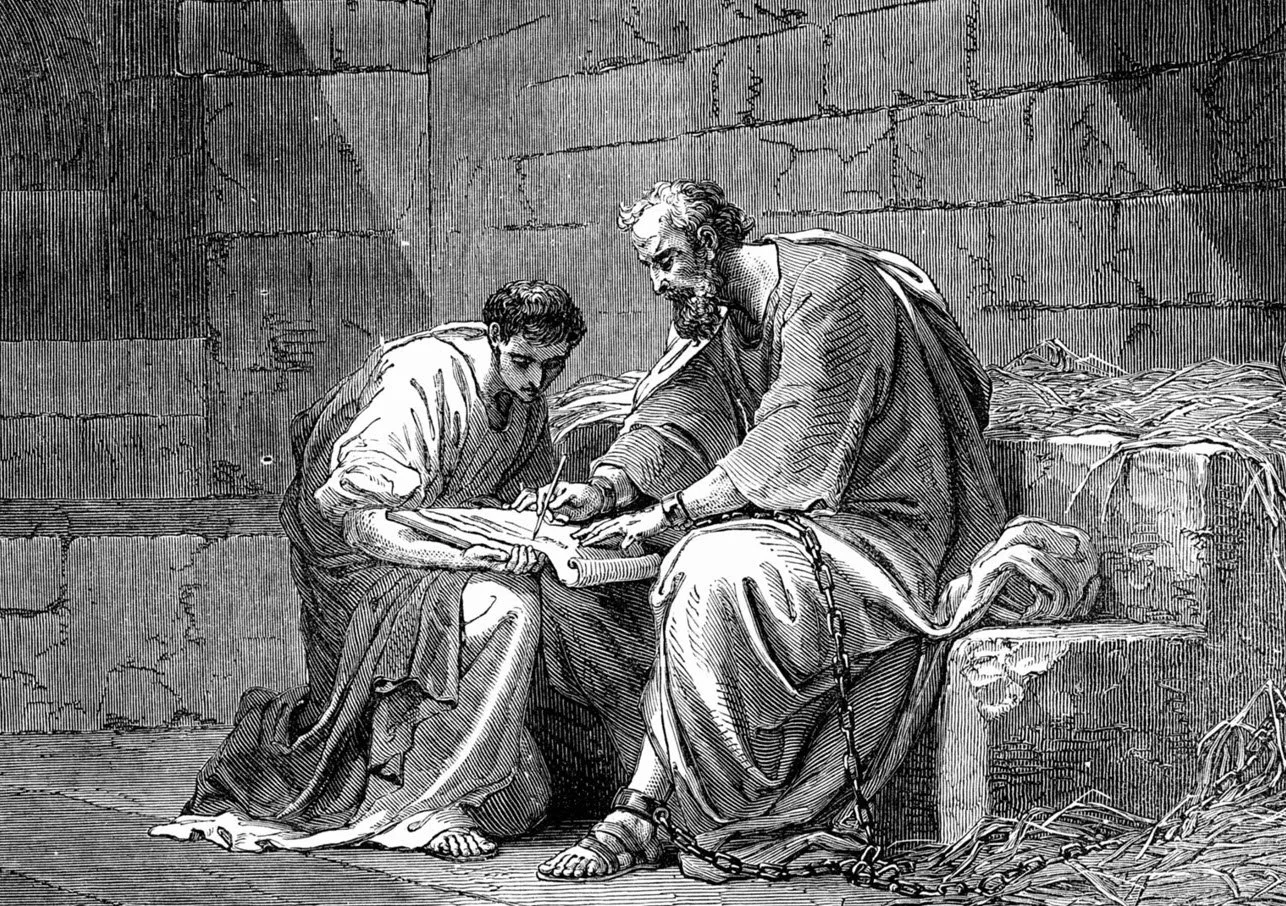
Paul was on a mission. His life was the mission. This is why Paul wrote letters, letters that shaped the Church. Letters to the Romans. Letters to the Corinthians. Letters to the Galatians. Letters to the Ephesians.
Across distance and time, Paul continued doing what he had been called to do: Deliver the message. And sometimes, that message had to meet the world on its own terms. In Athens, he walked into a city full of idols and philosophies. He stood on the Areopagus, equivalent to the Supreme Court or Congress floor in Greece and spoke of their Greek Altar dedicated to the: “Unknown God.” He declared this Unknown God is known indeed.
Paul’s story is not just about one man long ago. It’s about what happens when a life encounters Christ. Paul was not looking for Jesus. He was actively opposing Him. And yet God still broke into his life. Which means the question is not whether God can use someone like Paul. The real question is whether He can use someone like us. Sometimes all it takes…to change the direction of a life or even the direction of the world is one messenger willing to say yes.
Therefore if anyone is in Christ, he is a new creature; the old things passed away; behold, new things have come.
2 Corinthians 5