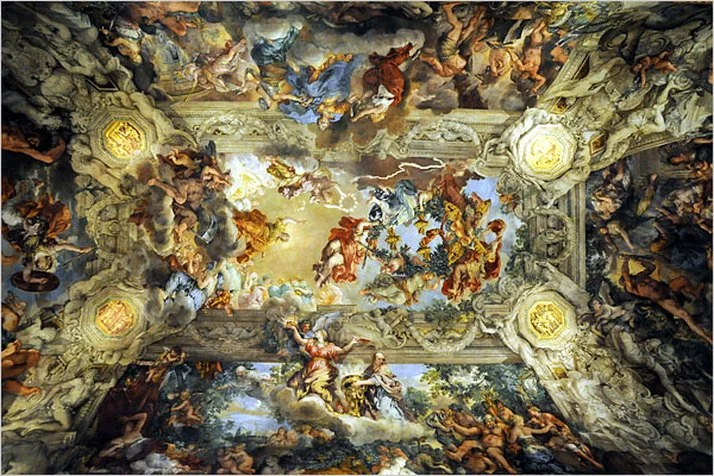
Course IV
Karma, Fate, Coincidence, Good Luck, but a word you almost never hear it anymore. Providence
Providence simply means this: God is not distant from the world. He is actively guiding it. Not controlling every detail like a puppet master… but lovingly guiding history toward His purpose. Think about it. In our modern culture we explain things with words like luck, chance, or coincidence. But for centuries, Christians used a different word: Providence. That unexpected meeting that changed your life. The difficulty that seemed terrible at the time but later led somewhere better. Christians would look at those moments and say: “That might be Providence.” Scripture is filled with this vision. Take Joseph in Genesis. Betrayed by his brothers, sold into slavery, falsely accused, thrown into prison. From the outside, his life looked like a disaster. But years later he says something remarkable: “What you meant for evil, God meant for good.” as through him the chain of events led to the Promised Land. Take Daniel, a faithful Hebrew taken into exile in Babylon, but rising to prominence as chief of the wise men, studying the heavens and the wisdom of the kingdoms around him. Only for generations upon generations later, Magi observing the stars embark on a great journey to honor the king of the world. Providence. Or think about the birth of Jesus. A Roman emperor orders a census. A young couple travels to Bethlehem. And through the decision of a pagan ruler, a prophecy made centuries earlier is fulfilled. Providence again.
God working quietly through history. But then we come to the hard question. If God is guiding the world… why is there suffering? Why do we experience loss, pain, tragedy? Why do the innocent suffer? There isn’t a simple answer. And anyone who tries to give one… probably hasn’t stood very close to real suffering. Bishop Robert Barron offers a helpful image. Imagine standing inches away from a massive painting. All you can see are dark red strokes or blotches. But if you step back… you begin to see something else. The whole painting coming together. The beauty that was invisible up close now becomes clear. Or think of another image. A writer sits in his study, surrounded by books, notes, and papers. A dog walks in and looks around. To the dog, it’s just a pile of objects. No meaning. No story. No logic tying it all together. And in some ways… we are like that dog. We see pieces. God sees the whole. But even those images fall short.
Because when you are in the middle of suffering, or someone you love is, no analogy really satisfies. No explanation fully takes the pain away. And Christianity doesn’t pretend that it does. Instead, it offers something deeper than an explanation. It offers a Person. Jesus Christ does not stand outside of suffering and explain it. He enters into it. He suffers. He is rejected. He is betrayed. He is crucified. And from the cross, He doesn’t give a philosophical answer. He gives Himself. This is the heart of Christian hope: That suffering is not meaningless… because it can be united to His. When we suffer, we are not alone. When we suffer, it is not wasted. When we suffer, somehow, mysteriously, it can become part of redemption.
So yes, we may not fully understand why suffering happens. But we do know this: God is not absent in it. He is present in it. Working even there. And if Providence is true, if God really is guiding the story, then even the darkest moments are not the end of the story. They are chapters. Chapters that, one day, we will finally understand. That… is Providence.
In God’s plan, nothing happens by chance
St. John Paul II