Course IV
“I look forward to the resurrection of the dead and the life of the world to come.”
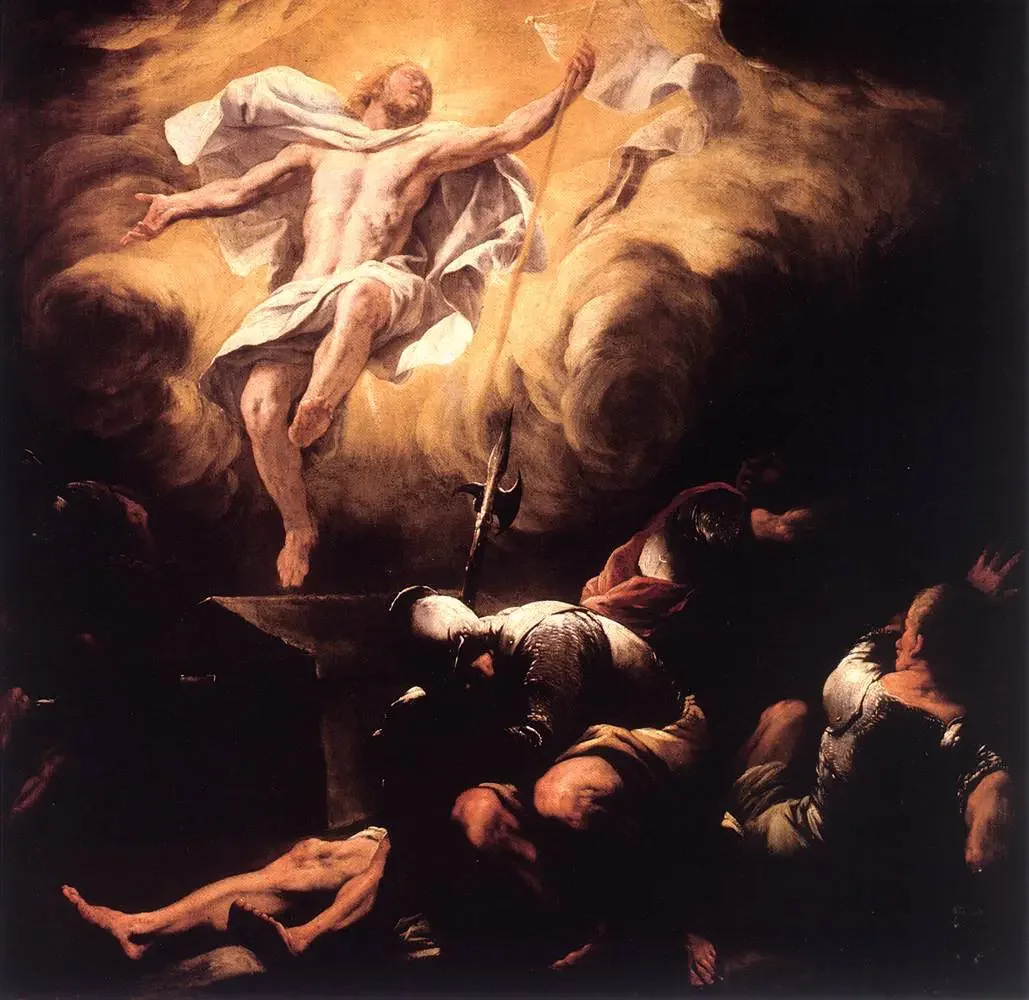
But if we’re honest… many of us aren’t entirely sure what that really means. Growing up, I had a picture of heaven that I think a lot of people have. When you die… you become an angel. You float around on clouds. It’s a comforting image. But it’s not what Christianity actually teaches. The truth is far more interesting. And far more hopeful. As Scott Hahn explains in his book Hope to Die, Christianity doesn’t teach that we become angels. Angels are a completely different kind of being. What Christianity teaches is something much bigger: the resurrection of the body. At the center of the Christian faith is not just that Jesus’ soul lived on. It’s that His body rose from the dead. The tomb was empty. And that changes everything. Because the promise of Christianity is not simply escaping this world. It’s that God will restore and renew it. Scripture points toward a future where heaven and earth come together. Where creation itself is healed. Where death, suffering, and decay are finally defeated. And where we are raised not as spirits but as fully alive human beings, transformed and glorified. The largest hint to this reality is the Transfiguration of Jesus allowing us to see a foretelling into this elevated nature, this higher dimension of reality.
In other words, the Christian hope is not less physical. It’s more real than anything we’ve experienced. The early Christians believed this so strongly that they treated the body with incredible reverence. They buried the dead carefully. They built cemeteries called “sleeping places.” Because for them, death was not the end of the story. It was more like… falling asleep before the resurrection. That’s why the Church talks about the world to come not just heaven as a distant place but a renewed creation, a restored world, a future where God’s kingdom is fully realized. And yet, as Hahn reminds us, the path to that future involves real choices in this life. After death, each soul encounters what is known as the particular judgment: The unveiling of our lives before God. Some are ready to enter His presence fully. Others need purification, a merciful process the Church calls purgatory, preparing the soul to receive God’s love completely. And some, sadly, definitively reject Him, choosing eternal separation. Hell This reality might sound daunting. But it’s meant to awaken hope, not fear. Because hope transforms the way we live today.
It calls us to prepare our souls, to seek mercy, to frequent the sacraments, and to grow in love. It reminds us that every act of grace, every moment of self giving, has eternal significance. We actually get a glimpse of this every time we go to Mass. The sacrifice of Christ is made present and we are drawn into something eternal. In a real way the Mass is a window into the world to come. When we begin to see this vision, something changes. It’s about preparing for the life that God will one day restore and living in a state of readiness. A life where everything broken is healed. Where love lasts and death is defeated.
That’s the hope Christians have held for two thousand years. Not just life after death. Not just a comforting idea. But resurrection: the life of the world to come.
We are on the Lord’s Team therefore we are on the winning side. Let us raise our glasses
Pope Benedict XVI