Course I
After David united Israel and prepared the heart of the nation.
God’s people needed a place to dwell with Him, a place to meet, to worship, and to encounter the presence of God. David longed to build a temple in Jerusalem, a permanent home for the Ark of the Covenant and a visible sign of God’s presence. But God had a different plan. He told David that the temple would be built by his son Solomon a reminder that God’s work often moves through generations.
This moment echoes a powerful truth from Moses’ story: just as Moses led the Israelites to the edge of the Promised Land but did not enter it, David laid the heart and vision for the Temple but did not see it completed. Both men faithfully carried out God’s plan, yet the ultimate fulfillment came through someone else. There is a lesson here for our own lives. Sometimes God calls us to plant seeds, prepare the way, or lead others, but we will never see the full fruit of our work. That does not make our role less important. Faithfulness, trust, and humility matter more than the final reward. Our lives, like Moses’ and David’s, are part of a larger story that God is writing across generations.
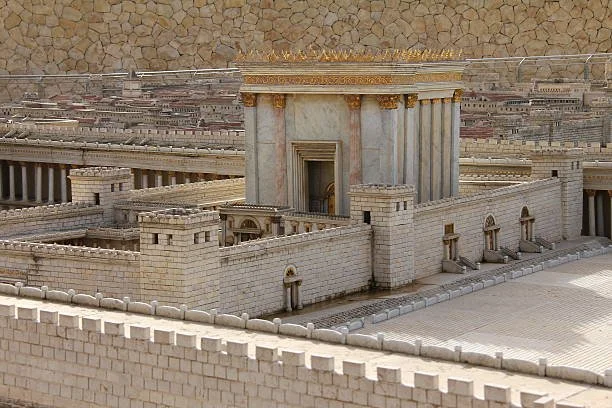
When Solomon built the Temple, it became more than a building. It was the heart of Israel, the place where heaven and earth met. Inside the Temple, the Ark of the Covenant rested, a sign of God’s law, His presence (manna), and His faithfulness to His people. The Temple was holy, sacred, and awe-inspiring, and it symbolized that God is not distant, but desires to dwell among His people.
I grew up thinking when I heard “the Temple” it was an ancient church, and yes it was that indeed, but so much more and critical to understand its significance. St. Peter’s Basilica in Rome somewhat begins to hint at its importance but to an Israelite of the time, the Temple was the spiritual center of the entire world. It was believed to be where God’s presence dwelt in a unique way. Faithful Israelites from all over the ancient countryside, would pilgrimage from far and wide just to worship at the outer walls. In a way, and not a perfect analogy, but you might compare it to the energy surrounding a massive sporting event. Especially the festivals throughout the year. Certain people couldn’t move past the outer walls of the Temple, and then even more so, faithful individuals couldn’t then move past the inner walls. There at the center was the enclosed building known as the Holy of Holies or the structure containing the Ark of the Covenant and the most sacred of worship.
It was there for ancient Israel Heaven and Earth met.
For the Israelites, the Temple was everything. Entering the Temple required preparation, reverence, and holiness. It was the place where the divine touched the human, where prayers lifted to heaven, and where another very important distinction needs to be understood and that is Sacrifice.
In the Temple, sacrifice was at the very heart of worship. It wasn’t just ritual, it was how God’s people dealt with sin, gave thanks, and restored communion with Him. Animals were offered as substitutes, their lives given in place of the people. Blood was seen as life, and that life was poured out as an offering back to God. Day after day, year after year, this rhythm of sacrifice formed the identity of Israel; a constant reminder that sin has a cost, and reconciliation requires an offering. The Temple also reminds us of God’s faithfulness over time:
From Abraham → Moses → David → Solomon, God is slowly forming a people who can recognize His presence. The Temple embodies that God’s promises are real, tangible, and lasting. It prepares the way for the ultimate dwelling.