Course I
When I say God, what do think of?
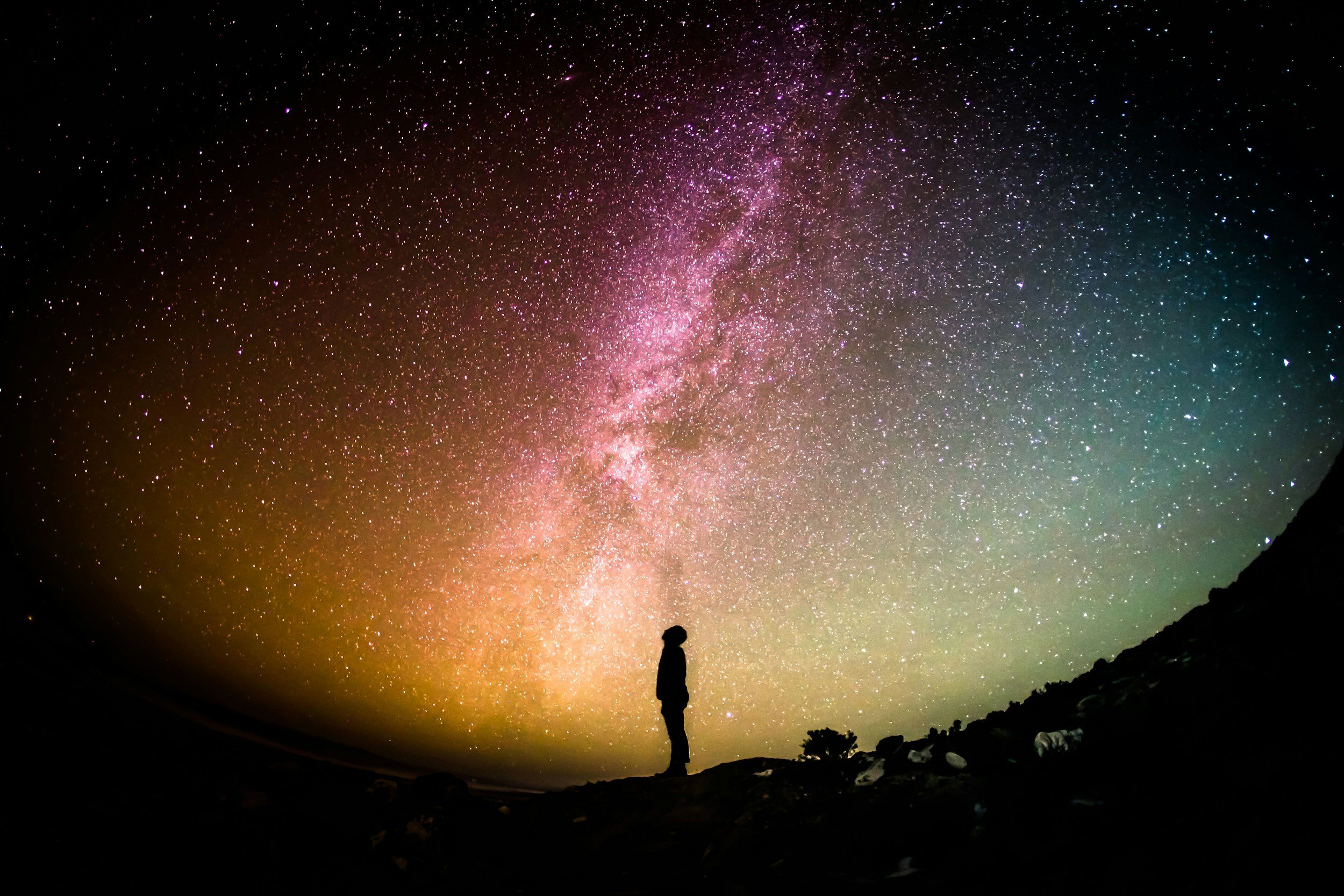
For some people, it’s an old man in the clouds with a white beard. For others, it’s a powerful being somewhere “out there.” For some, it’s just a vague force. But the Catholic tradition gives us something far deeper. In the Old Testament, when Moses asks God His name in Exodus, God responds: “I AM WHO AM.” God is not a being inside the universe. God is not one powerful thing among many things. God is the act of Being Itself. Sometimes those that reject the idea of God, like to position God as a large creature in the sky. But don’t confuse rejecting a cartoon version of God with rejecting the God of classical Christian thought. If the Christian position is that God is just a large being in the sky, the objections might make sense. But if God is the infinite act of existence, eternal love, and the source of all being; the conversation becomes much deeper. See God is not a superhuman inside the universe. He is the reason the universe exists at all. He does not “compete” with nature the way one creature competes with another. If God withdrew His sustaining presence for even a moment, nothing would remain. He is Being itself, holding in existence a world that He has given freedom to. The great theologian Thomas Aquinas said that God is the sheer act of existence itself. Everything you see:
The trees
The stars
Your own thoughts
Your beating heart
All of it exists because God is continuously holding it in existence. If God stopped willing you to exist for even a moment, you would not die, you would simply cease to be. That means God is not far away. God is closer to you than your own breath. But here is what makes Christianity radical: This infinite, eternal, self-sustaining act of Being is not an impersonal force. As we read in 1st John: “God is love.” And love requires relationship.
When we say God is love, we don’t mean love the way the world often talks about it, like romance, attraction, or simply strong feelings. Feelings come and go, but love is something deeper. As Bishop Robert Barron often explains, love is “willing the good of the other as other.” Now that may sound like a bland way to describe true love but unpack that.
In other words, true love means wanting what is truly good for another person and choosing to act for their good, even when it costs us something. Real love is not mainly about what we feel; it is about giving ourselves. A parent caring for a child, a friend standing by someone in difficulty, or a person sacrificing their time and comfort for another, these are examples of love in action. And true love is doing these actions with expecting nothing in return. But real love must be free. Without freedom, love becomes mere behavior, not a true gift of self. When a parent tells a child, “Go help your brother,” and the child obeys, that is a very good thing. It forms virtue, it trains the heart, it teaches what love looks like in action. But there is something deeper still, when that same child sees his brother in need and chooses, on his own, to help. No command, no reward, no fear, just a free decision to do the good. That is love and God is love. He is the perfect giver of Himself. From the beginning of creation, God desires our good and continually gives Himself to us. So, when we say: God is everywhere, God sustains everything, God knows everything We are not describing a cosmic dictator. We are describing the infinite act of Love that allows you to exist at this very moment. And here’s what that means: You are not an accident. You are not random matter.
Thomas Aquinas goes onto to say that all things exist first in the mind of God. Basically, unlike our mind which can picture images, his mind is fully creative, his mind creates reality. The stars, the oceans, the mountains, all held in the mind of God, and causing it to exist. That is not to say we are just a thought or illusion, but all creation exists first in the intellect of God, and by His will brings it into real being. Which means You are a thought eternally known and loved in the mind of God and his loving will brought you to life.
God The Creator
Now, nearly every ancient civilization had a story about how the world began. The Babylonians, Egyptians, Greeks, and many others told stories of creation filled with conflict, gods battling one another, chaos struggling against order, and the world emerging from violence or accident. In many of these stories, humans were created almost as an afterthought, often to serve the gods or relieve them of labor. The opening of Genesis is strikingly different. Instead of chaos and conflict among many gods, the Bible begins with one God who creates deliberately and peacefully. There is no struggle, no rival deity, no cosmic battle. God simply speaks: “Let there be…” and creation comes into existence. The universe is not the result of war or chance; it is the result of intention. Even more remarkable is what Genesis says about humanity. In ancient myths, humans were often created to be servants of the gods. But in Genesis, mankind is created in the image and likeness of God (Genesis 1:27). This gives human life an extraordinary dignity. Humanity is not an accident and not a servant, we are meant to reflect God himself. Genesis also describes creation as good. After each act of creation, God sees that it is good, and after creating humanity, he calls it very good. In a world where many ancient religions viewed matter as chaotic or even evil, Genesis declares that the physical world is part of God’s good design. These opening lines reveal something important about the Father. God is not distant, or jealous like the gods of ancient myths. He is a loving creator who brings order from nothing, beauty from emptiness, and life from his own creative will. Or as G.K. Chesterton noted, “I have always felt life a story, and if a story, a storyteller.”
Also, when we read the opening of Genesis, we have to remember we are reading ancient Jewish writers expressing theology in a beautiful literary form involving narrative patterns, poetry, and symbolism. To have to believe a strict six-day creation story or throw out all belief entirely is a false choice. St. Augustine cautioned Christians not to speak of creation in ways that contradict reason or observable reality. Creation, then, is not just the beginning of the Bible, it is the beginning of a relationship. The same God who spoke the stars into existence also created humanity to know him, love him, and live in communion with him.
God is an artist, and the universe is His work of art
-St. Thomas Aquinas-